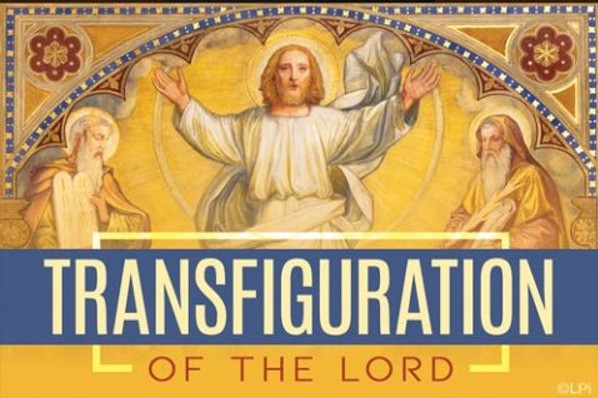
On August 6 we celebrate the Feast of the Transfiguration. We always read the Transfiguration on the Second Sunday of Lent (from either Mark 9:1-8, Matthew 17:1-6, or Luke 9:28-36). You may recall, of course, the account of Christ being transfigured before Peter, James, and John, on the high mountain, and they have a vision of Moses and Elijah and hear the voice of God the Father speaking. But why then do we also have a special feast of the Transfiguration on August 6?
While the Transfiguration has been observed as a major feast from very early on in Christianity, in 1457 Pope Callixtus III ordered that the entire Church celebrate the Transfiguration on August 6.
in commemoration of the raising of the siege of Belgrade (in Hungary) in 1456.
But why commemorate this battle? Because this was not just any battle, but one that perhaps turned the course of history. Only three years earlier, in 1453, the invading Ottoman Empire had conquered the city of Constantinople, which up until then had been one of the most important Christian cities in Medieval Christianity (sort of the Eastern “sister city” to Rome). It was a horrifying event as Constantinople was looted, crosses were torn down and burned or trampled, and the people were shamefully assaulted and enslaved. And the famous Eastern Christian Church, the Hagia Sophia (again, would sort of be the Eastern equivalent to St. Peter’s Basilica), was overrun.
This event led European Christians to be afraid that the same would happen to them when the Ottoman Turks invaded further into Europe. And only the Kingdom of Hungary (which had become a Christian Kingdom in the year 1000 under the saintly King, St. Stephen of Hungary), stood between the invading Ottoman Turks and the rest of Europe.
Thus when the Hungarian Army (with whom another Saint, John of Capistrano was involved), who was woefully outnumbered, successfully drove back the Ottoman Turks, the victory was seen as saving, not just Hungary, but all of Christian Europe from pillaging, enslavement, and the attempted destruction of their Christian faith. It was seen as a day when the light of Christ conquered over the invading darkness.
Thus, the following year, Pope Callixtus III declared that in commemoration of this battle, all Christians would celebrate the Transfiguration on this day, August 6, as in the event of the Transfiguration the Christians held a glimpse of Christ’s victorious light, that conquers over darkness, a sort of “sneak peek” of his victory over death and darkness that would occur on the Resurrection.
(Interestingly enough, in 1458, Pope Callixtus III died on August 6, the very day he declared to be the Feast of the Transfiguration).
So whatever battles with darkness we may be facing in our own life, may the Feast of the Transfiguration help us to look to the light of Christ that gives us a foretaste, a glimpse of hope that Christ does conquer all darkness.
Peace,
-Fr Kevin